

Wedding LED Display Solutions for Venues and Rental Companies
A wedding LED display is a modular video screen configured for ceremony backdrops, live camera feeds, couple stories, guest messages and reception entertainment. The right solution is based on the venue, screen dimensions, closest viewing distance, indoor or outdoor use, installation method, content sources and event schedule.
EagerLED helps venues, event production teams and rental companies select an LED screen, cabinet format and control workflow for each project. Share your application details to receive a configuration recommendation and quotation rather than a generic screen-only estimate.
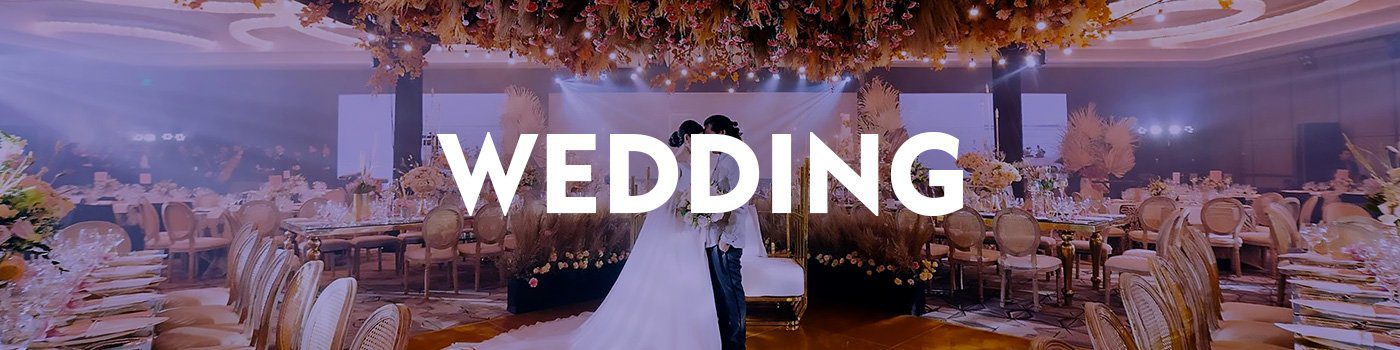
Recommended LED Screens for Wedding Applications
These three EagerLED products cover common wedding applications, from frequently transported rental backdrops to permanent indoor venue installations. Select a product according to cabinet format, setup frequency, venue conditions and service access.
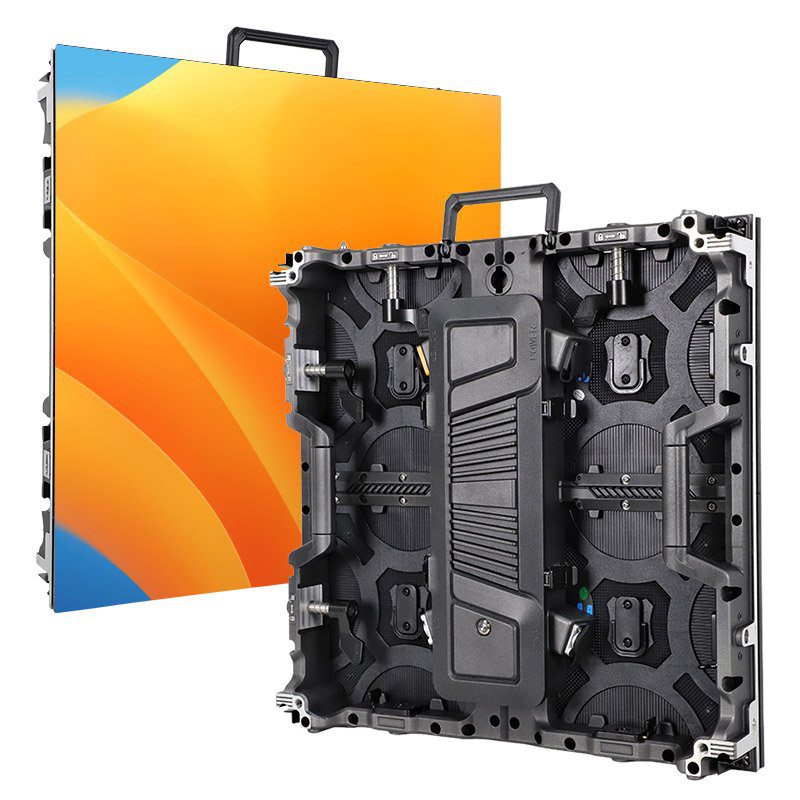
A compact rental cabinet for stage backdrops, side screens and layouts that change between events. Choose it when frequent transport, flexible screen dimensions and efficient assembly are priorities.
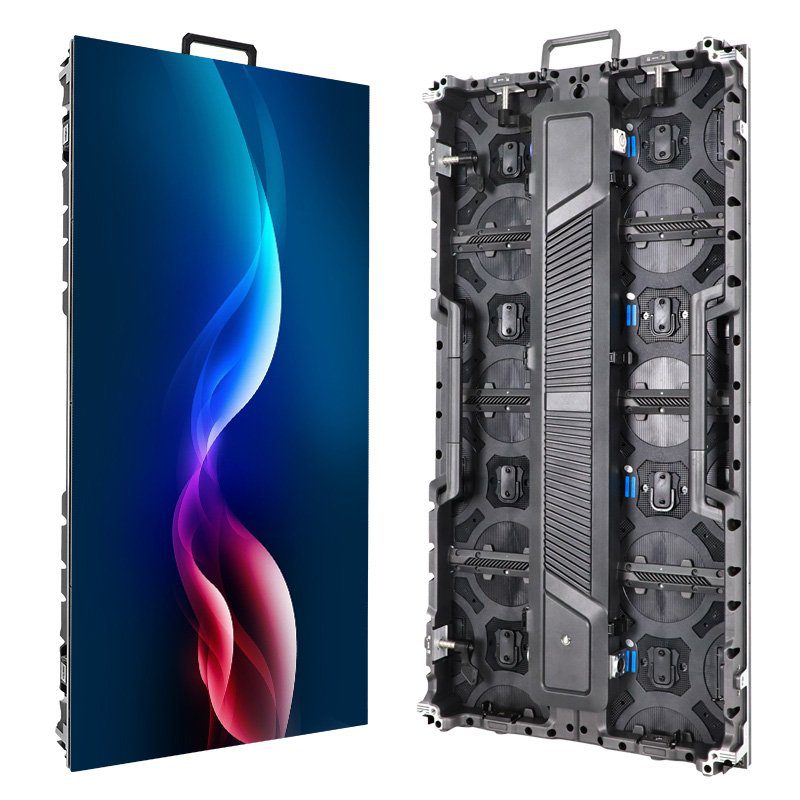
A larger rental cabinet format suited to broad wedding stages and repeated event production. Fewer cabinet joints can simplify the build for large rectangular video walls.
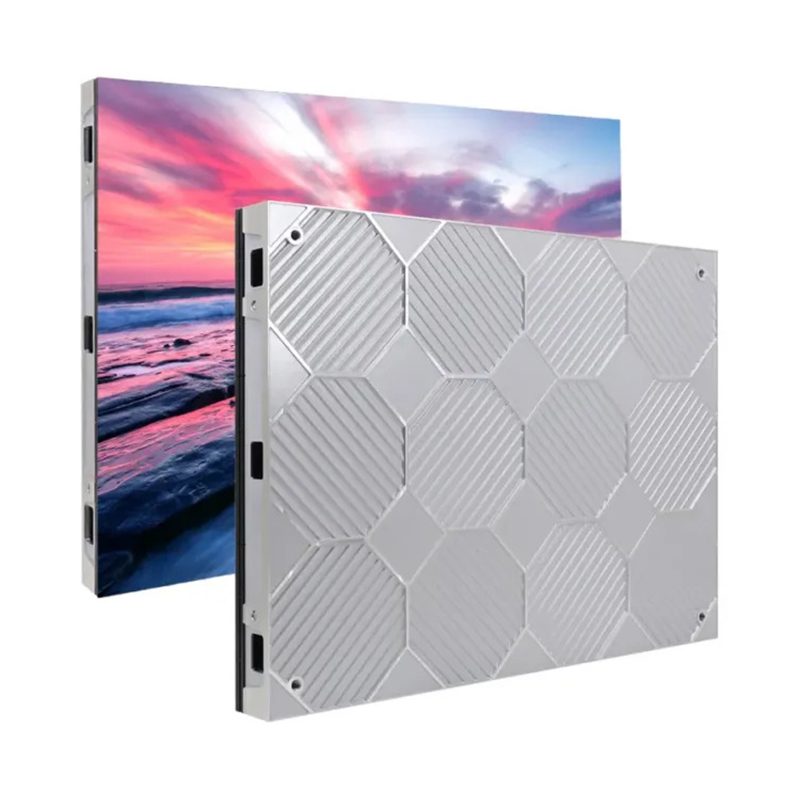
Benefits of a Wedding LED Display Solution
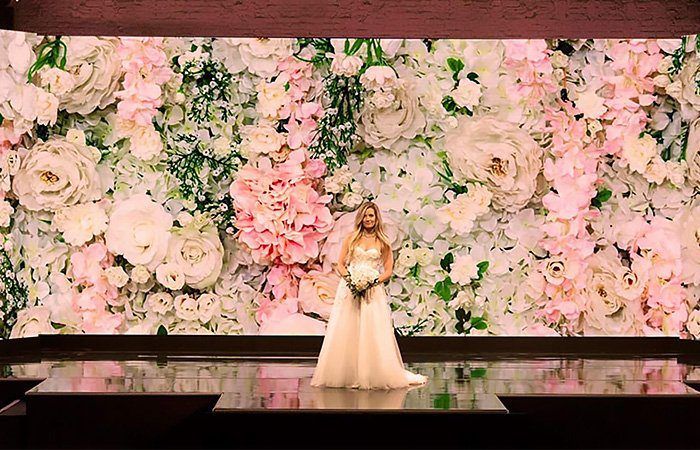
1. Clear visuals for every guest
A properly sized screen keeps ceremony details visible beyond the first rows. High contrast, suitable brightness and a pixel pitch matched to the viewing distance help photos, live video and text remain legible without overpowering the room.
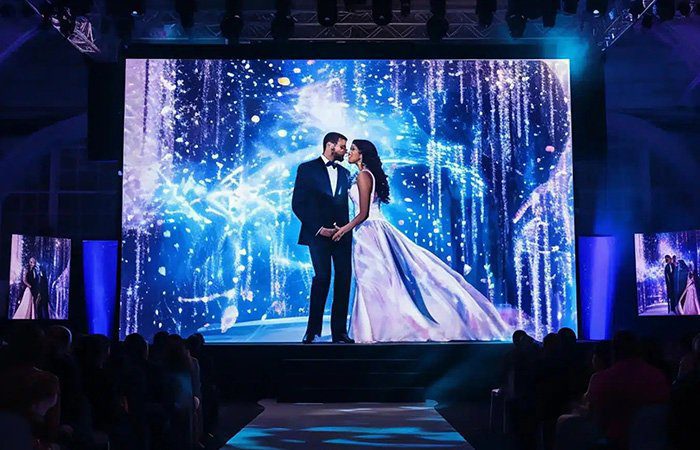
2. One screen for multiple wedding moments
The same display can move from a welcome graphic to a ceremony backdrop, live camera feed, speech captions, photo montage and reception visuals. A planned content schedule reduces physical set changes and keeps transitions consistent.
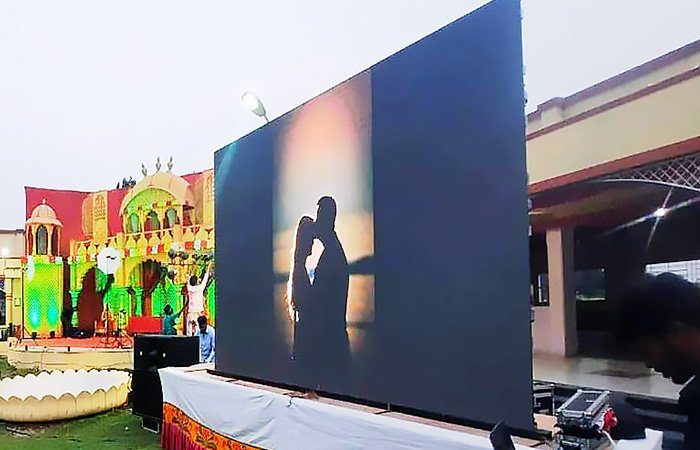
3. Configurations for indoor and outdoor venues
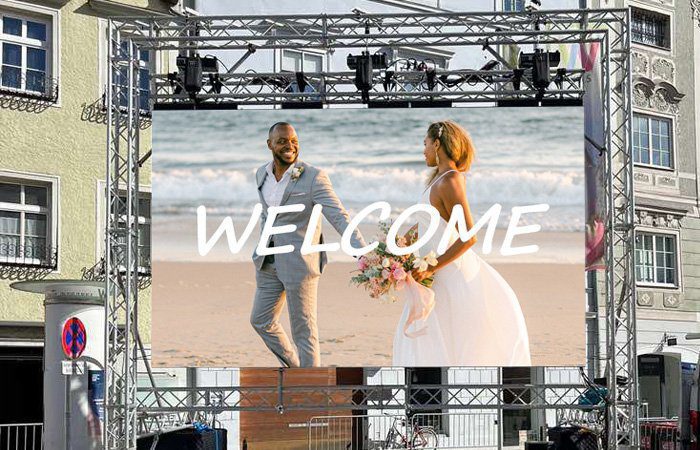
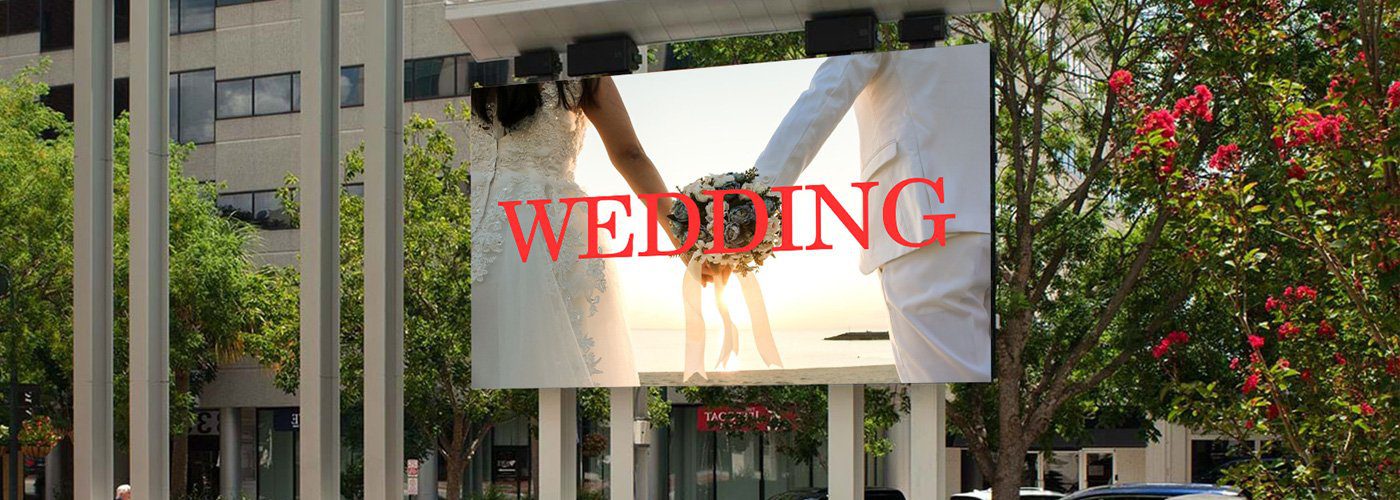
Indoor banquet rooms normally prioritize close-view image detail and controlled brightness. Outdoor ceremonies require weather-aware cabinets, sufficient brightness, protected power distribution and a structure designed for the site conditions.
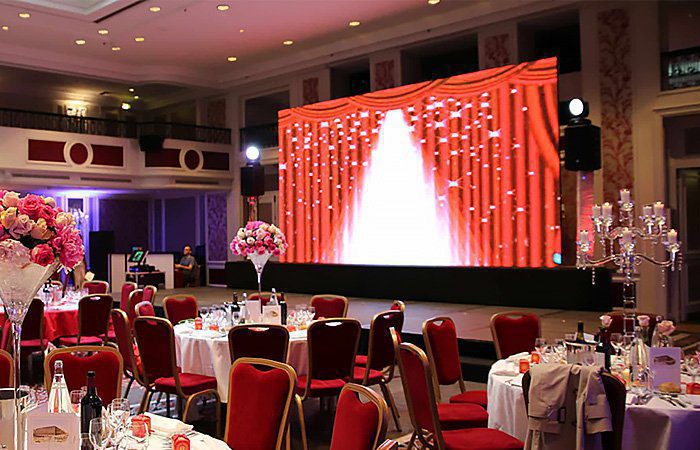
4. Support for live video and guest content
A wedding LED wall can accept feeds from cameras, media servers, laptops and presentation systems. With a defined signal plan, operators can switch between live ceremony coverage, prepared videos, guest messages and sponsor or venue content.
5. Reusable digital stage design
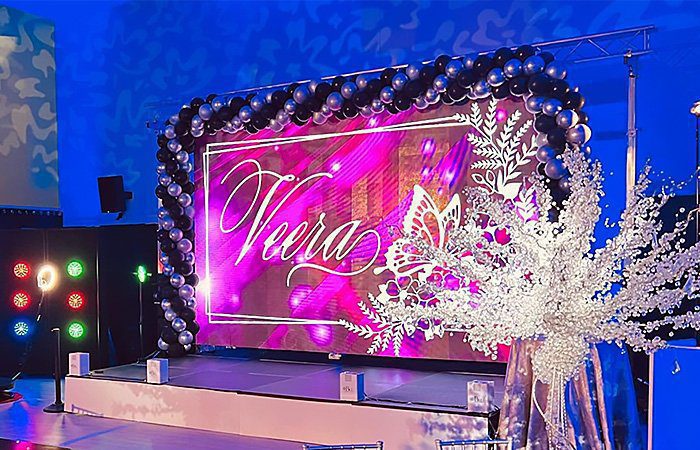
Digital backgrounds can be reused and changed without rebuilding the full stage set. The screen does not replace every decorative element, but it can reduce printed backdrops and create multiple visual scenes from one installed surface.
Why EagerLED for Wedding LED Display Projects
Project planning: EagerLED can recommend cabinet format, screen dimensions and service access after reviewing the venue, audience distance and installation method.
Signal workflow: The solution can be planned around cameras, laptops, media servers, processors and backup inputs so operators know how each source reaches the screen.
Installation guidance: Drawings, cabinet connection guidance and operating support help the rental or venue team prepare the structure, power and data paths before setup day.
Rental and permanent options: Mobile rental cabinets suit changing event layouts, while indoor fixed-install products suit banquet halls and dedicated wedding venues.
Wedding LED Display Solution: Planning, Products and Setup
A successful wedding LED display project coordinates the screen, structure, power, signal, content and event schedule as one system. Selecting a panel before confirming viewing distance or venue access often creates avoidable cost and setup problems.
- Venue type and installation location
- Required screen width, height and aspect ratio
- Closest and typical audience viewing distance
- Ground-supported, wall-mounted or suspended installation
- Camera, laptop, media server and audio requirements
- Event date, setup window and destination
The sections below explain the main applications, cost factors, screen types, selection process and setup workflow.
Wedding LED Display Guide
1. What Is a Wedding LED Display?
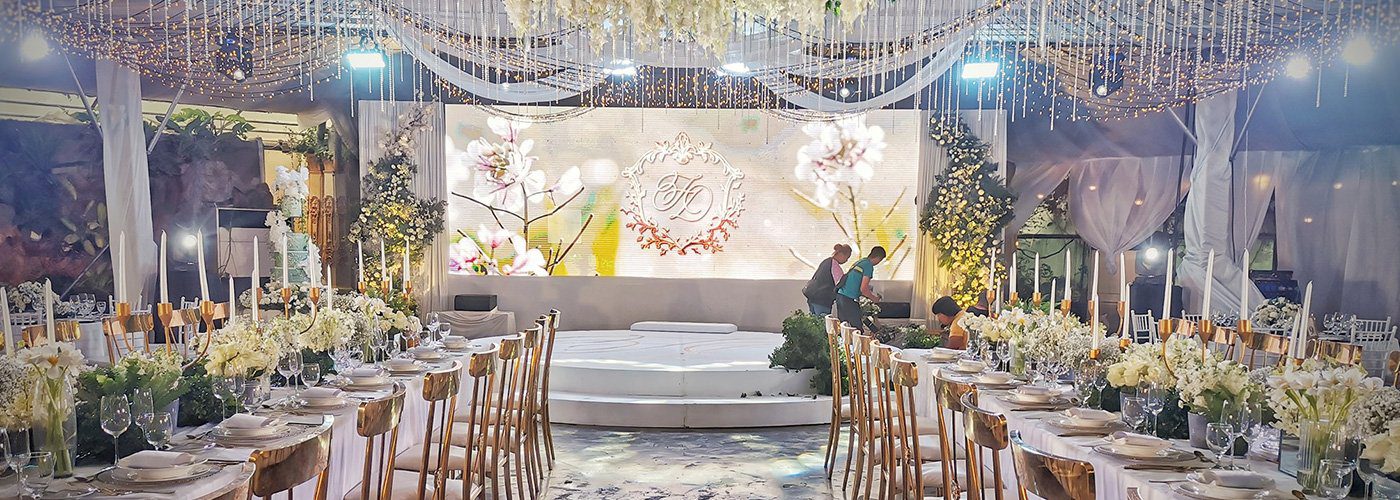
A wedding LED display is a modular direct-view screen used to show live video and prepared media during a ceremony or reception. Cabinets join to form the required size, while a video processor receives content from cameras, computers or media servers and maps it to the display.
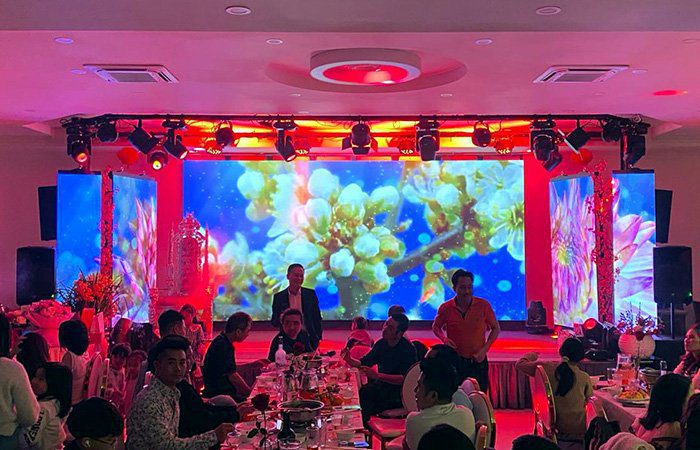
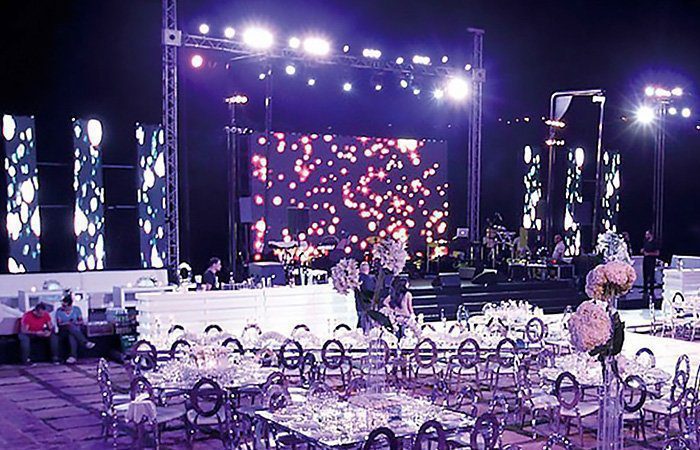
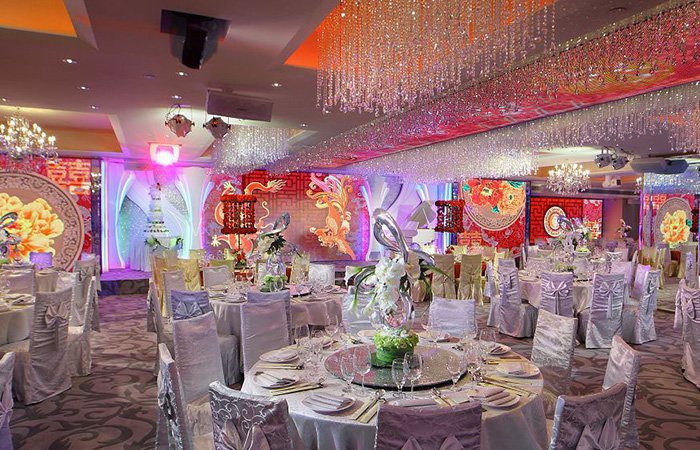
Typical positions include the main stage, two side screens, the welcome area, a ballroom feature wall or an outdoor ceremony structure. The display specification must be coordinated with the structure, electrical supply, signal route, operator position and safe service access.
2. Where Does a Wedding LED Display Add Value?
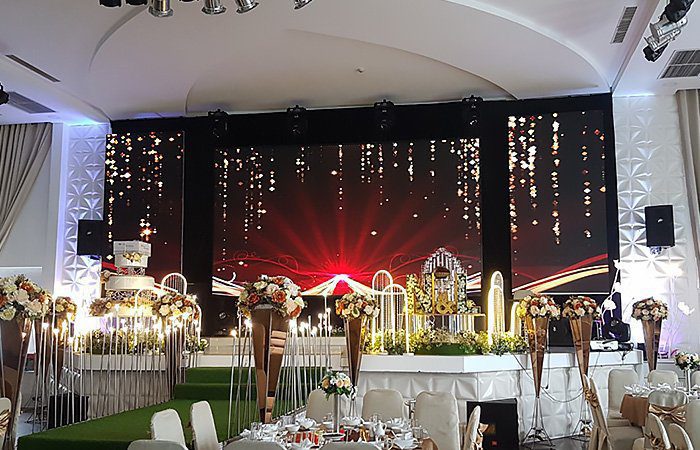
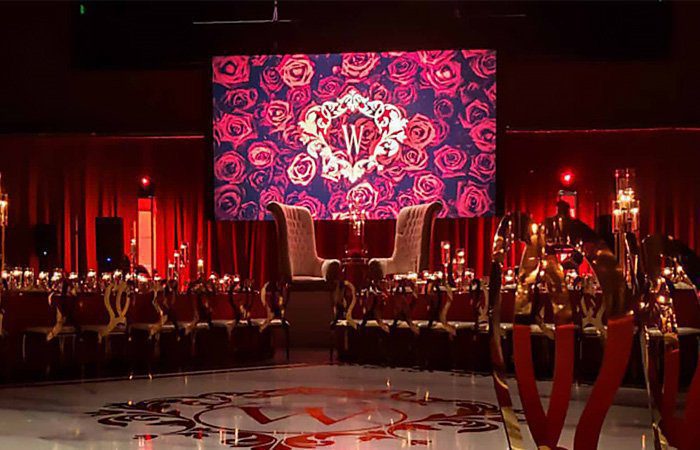
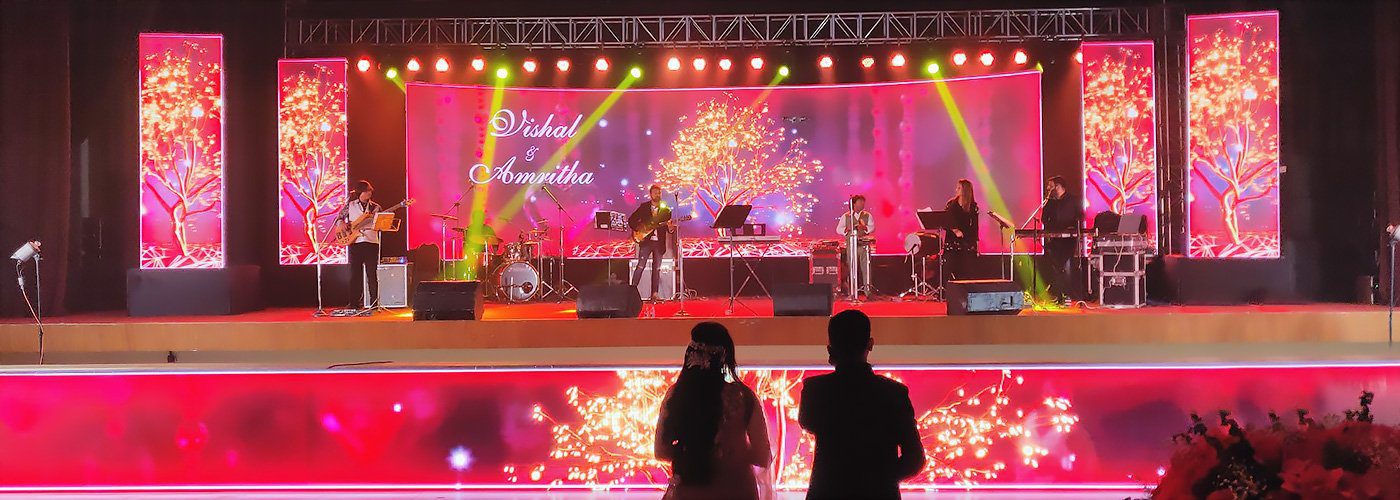
On the main stage, the screen can show a designed ceremony background, names, schedules, speaker titles and visual transitions. A centered wall creates one visual focus; side screens can preserve stage access or provide clearer sightlines in wide rooms.
2.1 Stage backdrops and ceremony visuals
Photos and videos should be prepared in the final screen aspect ratio whenever possible. Keeping faces, names and subtitles inside a safe area prevents important content from being cropped when the processor scales media to the LED canvas.
2.2 Couple stories, photos and video playback
For long banquet halls or large guest counts, cameras can send the ceremony to the LED wall in real time. The production plan should define camera positions, switcher outputs, signal conversion, cable routes and acceptable delay before guests arrive.
2.3 Live camera feeds for large venues
Guest messages, remote greetings, seating information and social content can be included when moderation and timing are assigned to a specific operator. Prepared templates keep spontaneous content consistent with the wedding’s typography and color palette.
2.4 Guest messages and interactive content
Using one content package across the welcome area, ceremony stage and reception creates a consistent identity. The design team should define colors, logo or monogram use, typography, transition style and the exact time each visual appears.
2.5 A consistent visual identity across the event
Wedding LED display cost depends on the complete system and service scope, not only the price of the cabinets. Request quotations with the same assumptions so screen options can be compared fairly.
| Cost factor | What changes the scope | Information to provide |
|---|---|---|
| Display hardware | Screen area, cabinet type, pixel pitch and indoor/outdoor rating | Required width and height, venue type, viewing distance |
| Structure | Ground support, wall mounting, suspension and service access | Stage drawing, load information and rigging restrictions |
| Processing and signal | Number of inputs, cameras, switching, scaling and backup feeds | Content sources, output formats and control position |
| Logistics and labor | Destination, transport, access hours, installation and dismantling | Venue address, event date and setup window |
| Technical support | Pre-event testing, rehearsal and on-site operation | Required service level and local crew capability |

3. What Determines Wedding LED Display Cost?
3.1 Screen type, cabinet format and total area
Total screen area and cabinet format determine the quantity of display modules, receiving hardware, flight cases and structural components. Compact cabinets support detailed layouts, while larger formats can speed assembly on broad rectangular walls.
3.2 Pixel pitch and viewing distance
Pixel pitch should be selected from the closest expected viewing distance and the type of content. Fine text and close-up camera shots require more image detail than decorative motion graphics viewed from the back of a ballroom.
3.3 Rental duration and logistics
Rental duration affects equipment availability, transport and labor scheduling. Include delivery, setup, rehearsal, event operation and dismantling times in the request so the quotation covers the full equipment hold period.
3.4 Installation, rigging and dismantling
The support or suspension method can change labor, hardware and engineering requirements. Venue-approved rigging points, floor loading, stage depth, ceiling height, emergency access and local safety rules must be confirmed before installation.
3.5 Control, power and technical support
A complete package may include a video processor, distribution equipment, cables, spare modules, power distribution and an operator. Audio is normally a separate system, but the video and audio teams must agree on playback connections and synchronization.
4. Wedding LED Screen Types and Applications
4.1 Modular LED video walls
The best screen type depends on how often it moves, where it is installed and what guests need to see. The table below connects common formats with practical wedding applications.
| Screen type | Typical application | Planning priority |
|---|---|---|
| Modular video wall | Main stage, ballroom feature wall or side screens | Aspect ratio, sightlines and service access |
| Rental LED screen | Touring events and changing venue layouts | Transport protection and assembly workflow |
| Stage LED screen | Ceremony backdrop, live camera feed and presentations | Camera compatibility and stage integration |
| LED floor | Entrance aisle, dance floor or interactive feature | Load rating, surface protection and content mapping |
| Creative LED display | Photo zone, entrance feature or premium decor | Custom content template and viewing angles |
4.2 Rental LED screens
A modular LED video wall combines cabinets into a seamless canvas sized for the stage. It is suitable when the venue needs one large image, a custom aspect ratio or repeatable configurations for different room layouts.
4.3 Wedding stage LED screens
Rental cabinets are designed for repeated transport, assembly and dismantling. They suit production companies, hotels and event suppliers that need to reconfigure the same inventory for backdrops, side screens and reception displays.
4.4 Interactive LED floor screens
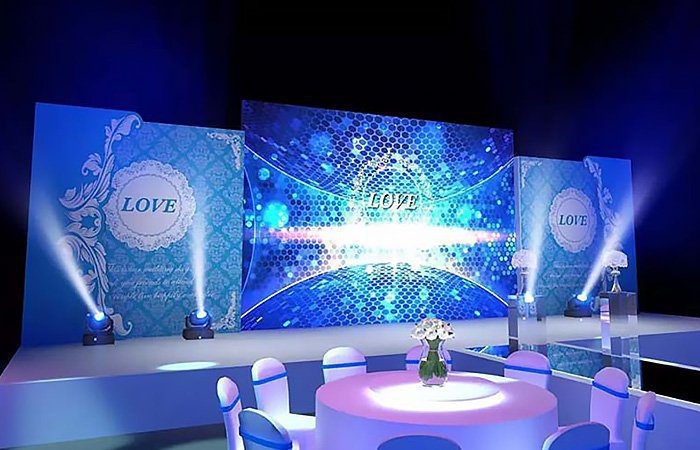
A stage screen acts as the primary visual surface behind or beside the couple. Its dimensions should leave room for entrances, florals, lighting fixtures, speakers and camera angles without placing important content behind people on stage.
4.5 Creative spherical LED displays
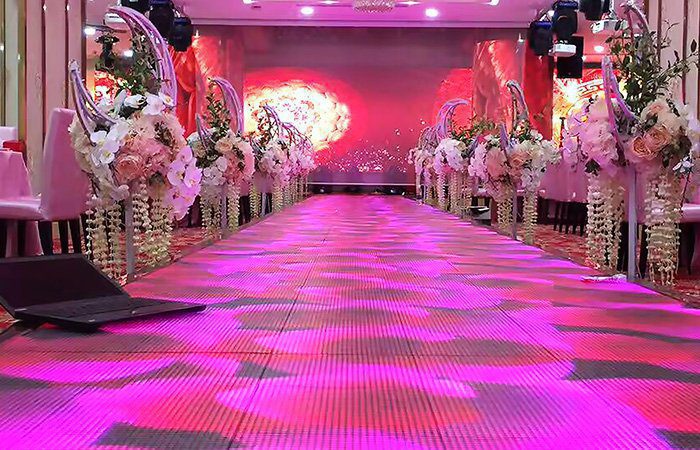
An LED floor can add motion to an entrance, dance area or performance, but it is a separate engineering decision. Confirm load capability, edge protection, slip resistance, cable routing and whether guests, scenery or equipment will cross the surface.
5. How to Choose the Right Wedding LED Display
5.1 Define the venue and content requirements
A spherical or other creative display works best as a focused visual feature rather than the main ceremony screen. Prepare content with the display’s shape and viewing angles in mind because a standard flat video may distort across the surface.
5.2 Match pixel pitch to viewing distance
Start with the application, then select hardware. A useful specification states who will view the screen, what content will play, where the display will stand, how it will be supported and who will operate it.
5.3 Calculate screen size and aspect ratio
Record whether the venue is indoor or outdoor, the stage width and depth, ceiling height, audience layout, access route and available setup time. Note whether the screen is the main backdrop, a live-video screen, a welcome display or a combination of roles.
5.4 Compare the complete project scope
Measure the closest and typical viewing positions. The supplier can then recommend a pixel pitch that balances image detail and project cost. Also confirm the maximum distance so text and camera framing remain readable throughout the room.
5.5 Evaluate the supplier and support plan
Choose width and height from venue proportions and the content format. A standard video ratio simplifies playback, while a custom panoramic wall may need purpose-built motion graphics. Ask for the exact pixel canvas before the design team exports final media.
6. How to Set Up a Wedding LED Display
Compare quotations line by line: display area, spare cabinets, processor, structure, power distribution, cabling, transport, installation, dismantling, rehearsal and on-site operation. A low cabinet price does not represent the total delivered solution.
6.1 Confirm the installation position
Review product documentation, project drawings, spare-parts plan, warranty terms and response process. For rental work, confirm replacement procedures during the event; for permanent installation, confirm service access and operator training.
6.2 Finalize screen dimensions and resolution
Setup should follow an approved drawing and a documented power and signal plan. Assign responsibility for the structure, display hardware, electrical distribution, cameras, content playback and final show operation before equipment arrives.
6.3 Prepare and test every content source
Confirm guest sightlines, stage entrances, fire and emergency routes, camera positions and service space. Ground support, wall mounting and suspension each require venue approval and suitable hardware; structural and electrical work should be completed by qualified local personnel.
6.4 Plan power, signal and backup paths
Lock the physical dimensions, cabinet layout and pixel canvas before producing final content. The media team can then export the correct aspect ratio and resolution, reducing scaling, blank areas and last-minute redesign.
6.5 Install, calibrate and rehearse
Collect every photo, video, title slide, live camera source and remote feed in advance. Test file formats, audio routing, playback order and transitions on the actual processor or an equivalent setup, then keep approved backup copies.
7. Wedding LED Display FAQ
Where can a wedding LED display be used?
Separate signal and power routes where practical, protect cables in guest areas and label both ends of every connection. Plan a backup playback device, spare signal path and appropriate power contingency with the venue and technical supplier.
How should wedding LED content be prepared?
After assembly, verify cabinet alignment, data mapping, brightness, color consistency and content scaling. Run a complete rehearsal from guest arrival through the final reception cue, then restrict unplanned changes after the approved show file is locked.
What backup plan should be prepared for the wedding day?
A wedding LED display can be used as a ceremony backdrop, ballroom feature wall, live-video side screen, welcome display, photo-zone feature or interactive dance floor. Indoor and outdoor applications need different cabinet, brightness, weather protection, structure and power plans.
What should be included in a wedding LED display quotation?
Prepare content after the supplier confirms the screen’s exact pixel canvas and aspect ratio. Export photos, videos, titles and animations to that format, keep important text and faces inside a safe area, test every file on the playback system, and retain approved backup copies.
8. Request a Wedding LED Display Solution
Prepare a backup playback device, duplicate copies of all show files, a spare signal route and appropriate spare LED modules or receiving hardware. The venue and technical supplier should also agree on power contingency, escalation contacts and who can approve a switch to the backup system.
